Are Bigots Killing Comedy?
Maybe the problem is not that audiences have become too sensitive. Maybe it is that too many comics now confuse prejudice with provocation, then call the backlash censorship when nobody laughs.
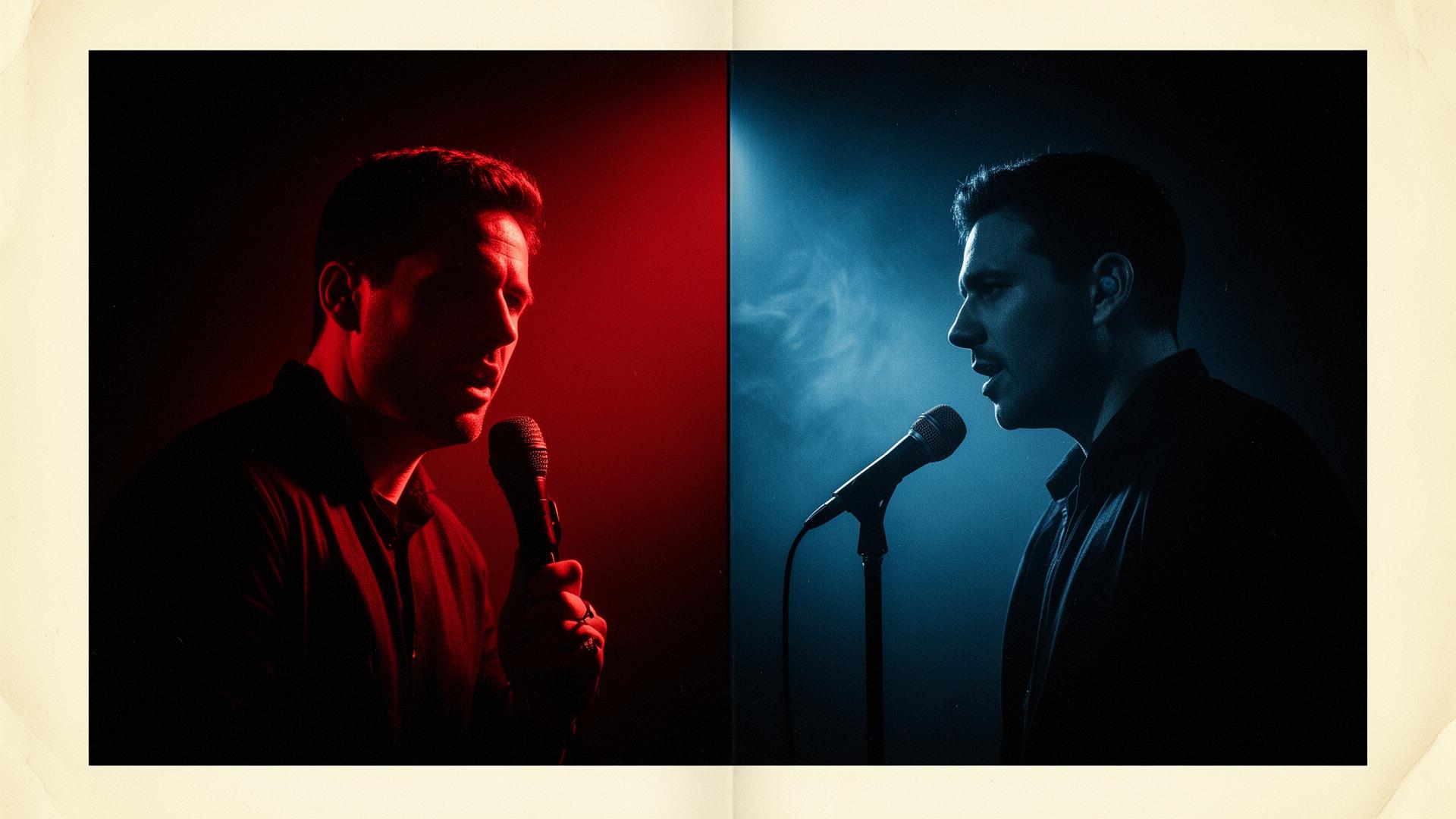
Comedy has always flirted with danger. That is half the appeal. A good comic walks the audience to the edge of something uncomfortable, makes them notice the drop, and then turns the moment into laughter so clean it feels like relief. Lately though, it is hard to shake the feeling that a certain class of comic has stopped writing the walk altogether. They just sprint towards the edge, scream a slur, do a little shrug, and then treat the resulting silence as proof of their bravery rather than evidence of a missing punchline.
Somewhere along the way, the word edgy stopped describing craft and started describing posture. The pose is familiar by now. A microphone, a smirk, a calculated pause, and then a line that exists not to surprise the audience but to dare them to react. When the room sours, the comic does not interrogate the bit. He interrogates the crowd. They are soft, apparently. They are woke. They cannot take a joke. The possibility that the joke itself was simply not good enough is treated as the one thing too dangerous to say.
The joke is not clever. It is merely loaded.
The Kevin Hart roast brought all of this into sharp, public focus. Tony Hinchcliffe's George Floyd material, delivered to a tuxedoed room and then beamed out to the wider internet, was framed by its defenders as boundary-pushing comedy of the kind the genre has always permitted. To a great many viewers, including Floyd's own family, it landed differently. The objection was not, in the main, that the subject matter was off limits. It was that the bit was not built. There was no architecture to it, no observation, no twist. There was a name, a death, and a punchline that mistook recognition for wit.
BET on the George Floyd joke backlash
BET's social channels became one of the first major hubs for the wave of outrage that followed Hinchcliffe's set, framing the moment as a flashpoint rather than a niche comedy story.
View post →Hart's own response in the days after, walking a careful line between defending his friend and conceding the bit was not tasteful, only widened the conversation. Coverage of his comments in People and elsewhere did not so much settle the question as keep it open: was this a joke that simply needed time to land, or a joke that, if you stripped away the lighting rig and the audience laughter cues, was really just the casual invocation of a Black man's televised killing for shock value?
People on Kevin Hart's response
Hart told People the joke was not in good taste, an admission that read to many as more careful than contrite, and that only sharpened the debate over what comics owe their audiences.
View post →It is worth saying clearly. Tragedy can absolutely be the raw material of brilliant comedy. Richard Pryor built monuments out of it. Hannah Gadsby built a different kind of monument out of it. Jerrod Carmichael does it weekly. The difference is craft. A joke about something terrible has to do work the audience can feel. It has to refract the tragedy through observation, perspective, character, or surprise. What it cannot do, if it wants to be more than a provocation, is simply name the tragedy and wait for the gasp.
This is where Kill Tony enters as the cultural mascot of a much wider tendency. The format is famously brutal, the room is allegedly merciless, and the entire ecosystem prides itself on being a place where comics can say things they cannot say elsewhere. Strip the branding away though, and what often plays out on that stage is not the discovery of new comedic frontiers. It is the same handful of shock pieces, racial gags, and bodily insults, performed in a room that has been trained to greet them as transgression rather than to evaluate them as jokes. The thrill, if there is one, is not in being made to laugh. It is in being made to feel like an insider for not flinching.
Mike Nellis on doubling down as a brand strategy
Nellis argued that the loop of provocation, backlash, then louder provocation has become the actual product, with the controversy itself serving as marketing for the next set.
View post →From there, follow the thread out into the wider podcast-bro ecosystem and a particular sensibility crystallises. Andrew Schulz has built an empire on the premise that he will go anywhere, say anything, and let the chips of plausible deniability fall where they may. The British duo ShxtsNGigs spent a chunk of last year explaining their way out of jokes about Black women that, even at the most generous reading, were not exactly trafficking in subtle social commentary. The houseguests change. The reflex is the same. Say something ugly, frame it as locker-room mischief, point at the offended and laugh, and let the algorithm reward the engagement either way.
The Jasmine Brand on the ShxtsNGigs fallout
Coverage of the podcast's apology cycle helped move the conversation from individual offence to a broader pattern of Black women being routinely positioned as the punchline of bro-coded comedy.
View post →People can tell the difference between a bit built on craft and a bit that sounds like someone trying to get their racism off under stage lights.
Audience capture is part of the problem too. Once a comic has trained a fanbase to applaud a particular kind of cruelty, the incentive to keep writing it intensifies, and the incentive to risk a different kind of joke, one that takes longer to land and might not even land on social media at all, withers. The bit gets coarser. The targets get smaller. The defence gets louder. And somewhere along the way, the actual writing stops happening, because writing is harder and slower than the loop of provoke, react, monetise.
Hello Beautiful on contempt as comedy
For Hello Beautiful and many of its readers, the cumulative weight of these moments was not isolated bad taste, but a worldview in which Black women's suffering reliably reads as a setup.
View post →The deeper craft problem is that a joke that reads as thinly veiled racism is almost never funny in the strict, structural sense. Comedy theorists have spent decades trying to name what makes a joke work, from incongruity theory to the benign violation framework that argues laughter sits in the narrow gap where something feels wrong but also safe. A racist line does not occupy that gap. It collapses it. There is no incongruity, because the premise and the punchline say the same thing. There is no benign violation, because there is nothing benign about repeating a stereotype on stage with a smirk and calling it observation. The audience is not surprised. They are simply being invited to confirm something they already suspect the comic believes.
They want the prestige of danger without the burden of invention.
It is also true, and worth conceding, that we are living through an unusually fast and unforgiving cultural climate. A misjudged set used to die in the room. Now it can travel the world before the lights have come up. There was a time when comics had more leeway to test material, fail in public, and try again the next week without becoming the day's discourse. That has changed, and it has changed quickly. Plenty of comics have made fair points about the chilling effect of an internet that treats a clipped fifteen seconds as a moral verdict on a career.
But conceding that does not require accepting the broader claim being smuggled in alongside it, which is that comedy should be exempt from criticism. It should not. Comedy is a craft like any other, and like any craft it is open to judgement. If a poem fails, we say so. If a film traffics in lazy stereotypes, we say so. The fact that a microphone is involved does not change the rules. A joke is a piece of writing. It can be brilliant. It can also be cowardly, lazy, mean, or simply not as clever as it thinks it is. Pretending otherwise is not a defence of comedy. It is a way of insulating bad work from accountability.
Comedy is not above criticism just because the person saying it calls it a joke.
The honest version of this argument is that audiences have not really turned on comedy at all. They have turned on a very specific style of comedy that mistakes recognition for surprise, posture for craft, and cruelty for nerve. When something genuinely sharp and inventive cuts through, by Carmichael, by Atsuko Okatsuka, by Ramy Youssef, by James Acaster, by London Hughes, by Sam Jay, the rooms still fill, the clips still spread, and nobody seems to have any trouble distinguishing real risk from racialised shock. The collapse, where it is happening, is not at the level of comedy itself. It is at the level of comics who have decided they would rather be loud than good.
There is something else, too, that the most defensive voices in this conversation tend to skip over. Comics are not the only people in the room with eyes. Audiences, especially the ones being made the joke, can read a set perfectly clearly. They can tell when a comic is using a subject and when a comic is just naming it. They can tell when the writing has done the work and when the laugh is being smuggled in on the back of someone else's grief. To call that discernment censorship is itself a small act of contempt. It assumes the only listener who matters is the one who is in on the bit.
OK! Magazine on the wider cultural ripple
Mainstream entertainment outlets like OK! tracked the controversy out of niche comedy spaces and into a much broader conversation about taste, accountability, and the limits of edge.
View post →So, back to the question. Are bigots killing comedy? Probably not in the apocalyptic sense the phrase suggests. Comedy is too elastic, too restless, too good at producing new voices to be killed by anyone. But there is a quieter, more accurate version of the question worth sitting with. Are a particular kind of comic, propped up by a particular kind of audience, hollowing the form out from the inside, swapping invention for provocation and then calling the resulting hangover a free-speech crisis? That feels much harder to dismiss.
The line, in the end, is not between offensive comedy and inoffensive comedy. It never was. The line is between comedy that does the work and comedy that wants the credit without doing it. One of those will keep finding new audiences for as long as anyone holds a microphone. The other will keep mistaking the silence for awe.
So, are bigots killing comedy, or are audiences simply refusing to pretend that cruelty is craft?
Sources
- Los Angeles Times: Kevin Hart roast coverage
- People: Hart on the Hinchcliffe joke
- Revolt: The Floyd family responds
- BBC News: Hinchcliffe controversy report
- The Conversation: Psychology of denigrating jokes
- Humor Research Lab: Benign Violation Theory
- Psychology Today: Can people be too woke to joke?
- PMC: Research on disparagement humour