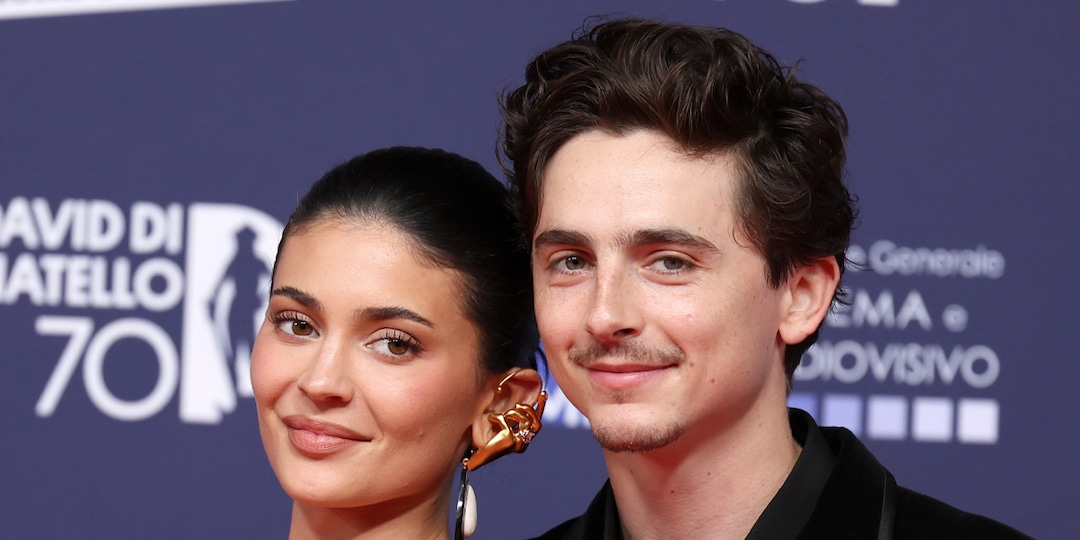
Have We Officially Entered the Post-Kardashian Era?
Is it just us, or has it been really quiet on the Kardashian Creek lately? A few years ago Kylie's birthday would have been akin to a national holiday, this year she opted for a quiet, humble bash with a handful of close friends. A sign of the times?
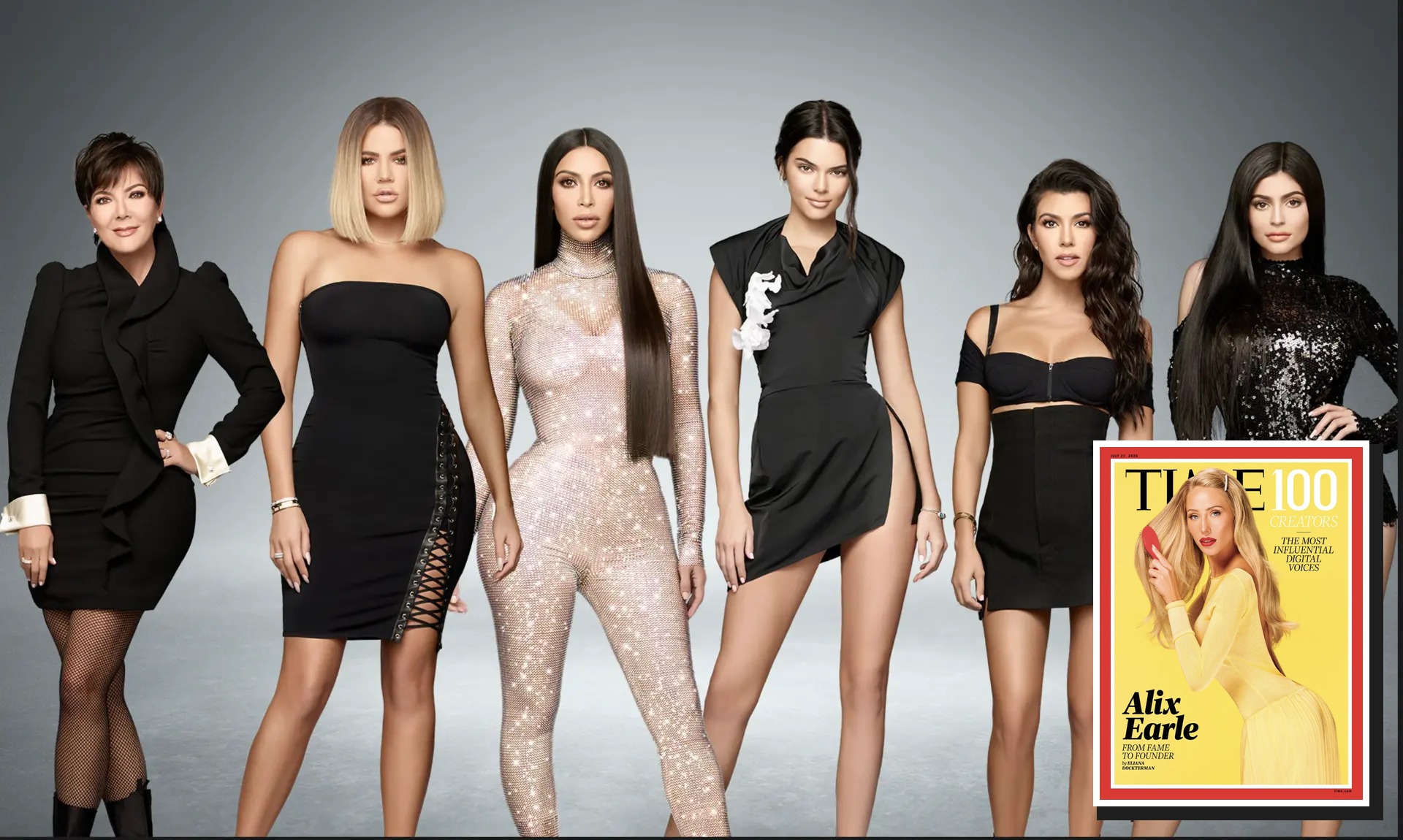
Is it just us, or has it been really quiet on the Kardashian Creek lately?
Apart from a few questionable brand deals and the occasional romantic headline, we haven't heard all that much from the Kardashian-Jenners recently. And for a family that once seemed physically incapable of staying out of the news, that feels... strange.
Well, as the age-old saying goes, all good things do indeed come to an end. Gone are the days when the Kardashians had the world eating out of the palm of their hands. And in their place is a whole new generation of social stars who are more real, more raw, and, crucially, more immediate. In fact, one starlet in particular seems to have taken the Kardashian playbook and added a few more chapters that even the famous Calabasas clan could learn a thing or two from.
There was a time when the Kardashians could sell you almost anything. A lip kit, a waist trainer, a fragrance, a bikini, a credit card, a video game, a cookbook. If one of the Kardashian-Jenners put her name on it, millions of people wanted it. For roughly 15 years, the Kardashian-Jenner family did not simply participate in pop culture. They were pop culture. If something was happening, one of them was probably involved. If something was fashionable, one of them was probably wearing it. If something could be monetised, Kris Jenner had probably already registered the trademark.
And it worked because, initially, the products were almost beside the point. Kim did not launch SKIMS and then become interesting. She was interesting first. Their businesses were an extension of the fantasy they had already sold us. The Kardashian trick was to make us care about the person, and then make us want whatever the person was selling.
When Keeping Up with the Kardashians premiered in 2007, the family was compelling because they were spectacularly messy. Kim was crying over a boyfriend. Kourtney was fighting with Scott. Khloé was fighting with everyone. Somebody was always pregnant, getting divorced, or being cheated on. On one memorable occasion, Kim lost a diamond in the ocean and behaved as though civilisation itself had collapsed.
It was glorious.
The genius of the early Kardashians was that they didn't just show us their best lives. They showed us the bits of their lives that most rich and famous people would pay a publicist to erase.
That was the secret sauce.
The audience didn't feel like they were watching celebrities. They felt like they were watching a family they happened to know. The money and the mansions were aspirational, but the arguments, break-ups, insecurities and questionable decisions were recognisable. They could have been your family. Just with considerably better lighting and a Kris Jenner-shaped business manager.
But fame has a nasty habit of ruining the thing that created it.
By the later seasons of Keeping Up, and especially by the time The Kardashians arrived on Hulu, you could practically see the machinery behind the curtain. Things would happen off-camera and then be discussed afterwards. Conversations felt like conversations that had already happened somewhere else. Dramatic revelations arrived suspiciously neatly packaged. The family were still telling us about their lives, but increasingly, they were telling us the version of their lives they had decided we were allowed to see.
It became less come into our house and more welcome to the Kardashian corporate communications department.
But where is the mess?
Gone.
And once you remove the mess, you remove the intimacy.
Which is precisely why up-and-coming social media star Alix Earle is so interesting.
Because Alix is essentially doing what the Kardashians used to do before they became too famous to do it.
She is letting us watch.
Not six months later. Not after a producer has edited the footage into a neat storyline. Not after a publicist has decided on the appropriate response.
Now.
Alix is never particularly far from a headline, and importantly, the headline doesn't have to be flattering. She has been linked to everyone from Tom Brady to Formula 1's Lando Norris. Recent reports have described the pair as having gone on several dates, while Earle's increasingly visible friendship with Stassie Karanikolaou has given the internet another subplot to obsess over.
Maybe it means something. Maybe it means nothing.
That is almost beside the point.
The point is that Alix gives people material.
That is influence in 2026. Not a billboard. Not a carefully worded press release. A rumour with a comment section.
She posts something, people speculate, she responds, people speculate about the response, and suddenly there is a 72-hour cultural event happening entirely inside the comment section. That is influence in 2026. Not a billboard. Not a carefully worded press release. A rumour with a comment section.
And unlike the Kardashians, Alix is still willing to let the audience see the less flattering bits. If something embarrassing happens, she talks about it. If people are annoyed with her, she addresses it. If she makes a questionable decision, chances are there will be a TikTok about it before the rest of us have even finished forming an opinion.
She has taken the original Kardashian formula and basically removed the television network.
The Kardashians taught us that watching someone's life could be entertaining. Alix's generation figured out that you don't even need to wait for the episode.
It's not just Alix Earle, though, the entire architecture of celebrity has changed.
Look at IShowSpeed. Look at Kai Cenat. These live streamers don't need a reality show because they are essentially broadcasting one themselves. They stream for hours. They travel. They react. They argue. They laugh. They get tired. They make mistakes. They more often than not make complete fools of themselves. And millions of people sit there and watch it happen.
There is no season premiere or dramatic cliffhanger. The audience watches it all unfold in real time.
Streaming has done something television never could: it has almost completely removed the distance between the person and the audience. Research into livestreaming has found that viewers are particularly engaged by opportunities for interaction and deeper channels of connection with streamers, which is part of what makes the format feel so much more intimate than traditional media.
The Kardashian fantasy was always that you had been invited into their home. The likes of Kai and Speed and to an extent even Alix Earle have basically left the front door open.
And once you experience that level of access, traditional celebrity starts to feel strangely distant.
We have entered an era of extreme parasociality, where following someone online can start to resemble an actual friendship. We know their friends, their exes, their parents, their pets and, somehow, which people they have recently unfollowed. We know when two influencers have stopped appearing in each other's Instagram Stories and immediately start building a conspiracy board.
Because when you spend that much time with someone, you don't just become interested in them. You become invested in them.
And that is why people increasingly want all of you or none of you.
You cannot spend years teaching an audience that they are your friends and then suddenly become a luxury brand with a face. Well, you can. But eventually people will find someone else to be friends with or even try to emulate.
For almost a decade, the Kardashian silhouette was the blueprint. The tiny waist, enormous bum, exaggerated hips, full lips and aggressively sculpted everything became the visual language of the Instagram era. The BBL baddie was everywhere. Women were buying waist trainers, getting Brazilian butt lifts and squeezing themselves into dresses that seemed to have been designed using only a ruler and a dream.
The Kardashians didn't invent the hourglass body, but they helped turn one very specific version of it into the defining beauty ideal of the 2010s.
Now look around.
The pendulum has swung.
The ultra-curvy Kardashian silhouette has started to lose its grip, while the painfully thin, elongated body associated with the 1990s heroin-chic aesthetic has made its way back into fashion and beauty culture. Vogue has noted the apparent shift away from the “slim-thick” ideal and the return of thinness as a desirable standard, while also pointing out the absurdity of treating women's bodies as passing trends in the first place.
And who better to be the poster girl for this particular cultural U-turn than, you guessed it, Alix Earle?
She has the skinny, blonde, slightly undone, slightly hungover look that feels less Kardashian glamour and more like a 1997 Calvin Klein campaign.
The beauty industry has perhaps the simplest business model on earth: make women feel like yesterday's body is wrong, sell them tomorrow's body, then wait a few years and start again.
Of course, the irony is that fashion has once again convinced us that the body it spent the last decade telling us to escape is now the body we should want. The beauty industry has perhaps the simplest business model on earth: make women feel like yesterday's body is wrong, sell them tomorrow's body, then wait a few years and start again.
The Kardashians were the poster girls for one version of that cycle.
Alix is the poster girl for the next.
And perhaps that is why she feels so culturally relevant right now.
The Kardashians are still hugely successful. SKIMS is enormous. Kylie Cosmetics is still a serious business. But financial success and cultural dominance are not the same thing.
The Kardashians have become institutions. And institutions are rarely where culture feels most alive.
Culture is now happening in bedrooms, in bathrooms, on the side of the road, literally anywhere with a Wi-Fi connection. This shift was ushered in by the rise of TikTok, a platform that has almost become the anti-Instagram (a platform synonymous with the Kar-Jenner era), trading filters and perfectly curated grid posts for bonnets and breakdowns.
The Kardashians used to be the mess. Now they own the building where the mess happens. And that is a very different kind of fame.
So, have we officially entered the post-Kardashian era?
I think we have.
Not because the Kardashians have disappeared. They haven't.
Because once someone lets you into the room, it is very difficult to go back to watching them through the window.
The Kardashians spent 15 years inviting us inside. Then they built a mansion around themselves. The new generation?
They've left the front door wide open. And now we've made ourselves at home.
Are you still keeping up with the Kardashians, or have you moved on?