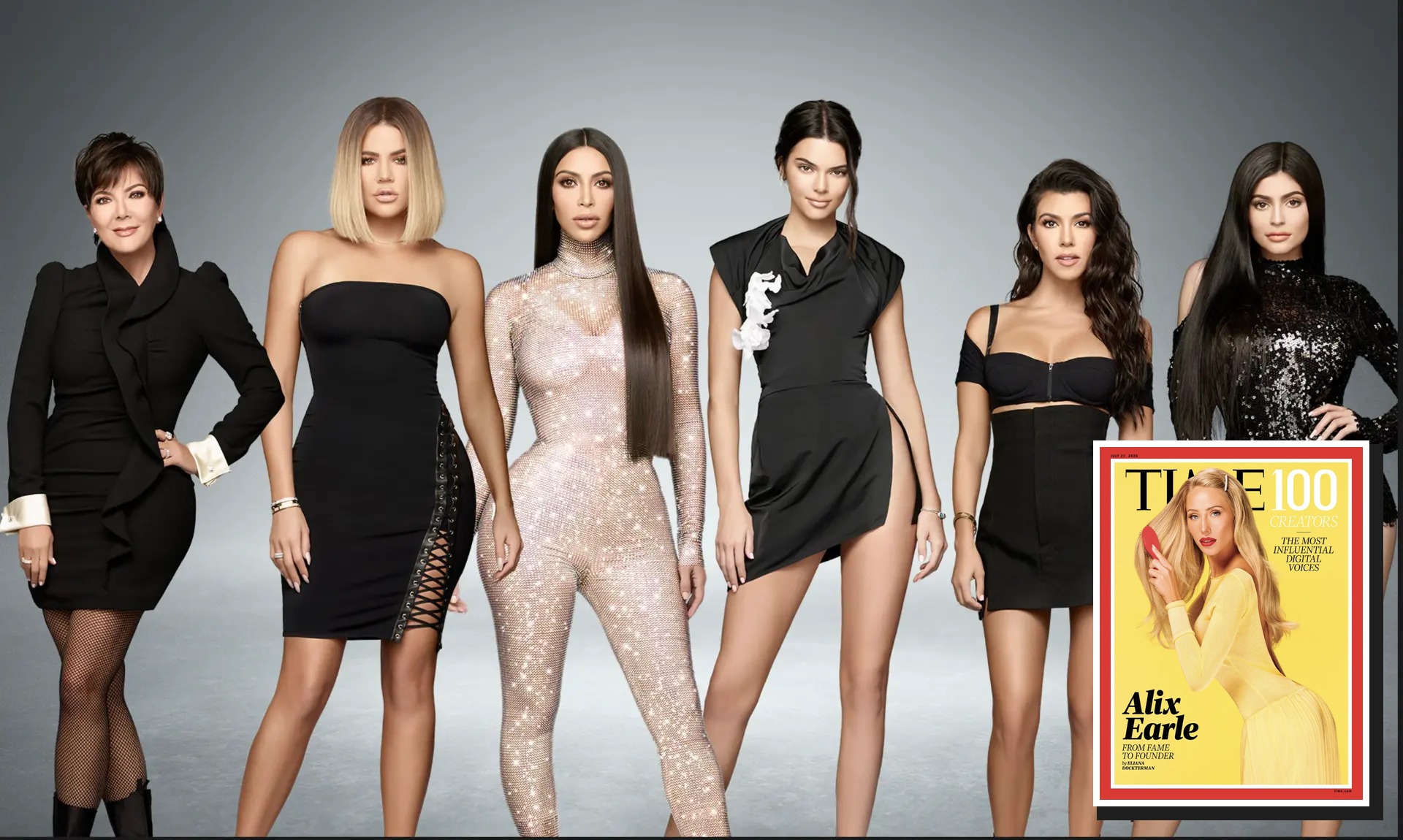
Why Did Nike Put Kim Kardashian at the Centre of the World Cup?
As the World Cup approaches, adidas and Nike are telling two radically different stories about what football culture looks like now. Adidas has leaned into nostalgia, heritage, and the sport's next generation with startling confidence. Nike, meanwhile, has gone full celebrity multiverse, with Kim Kardashian sitting conspicuously close to the centre of the frame.
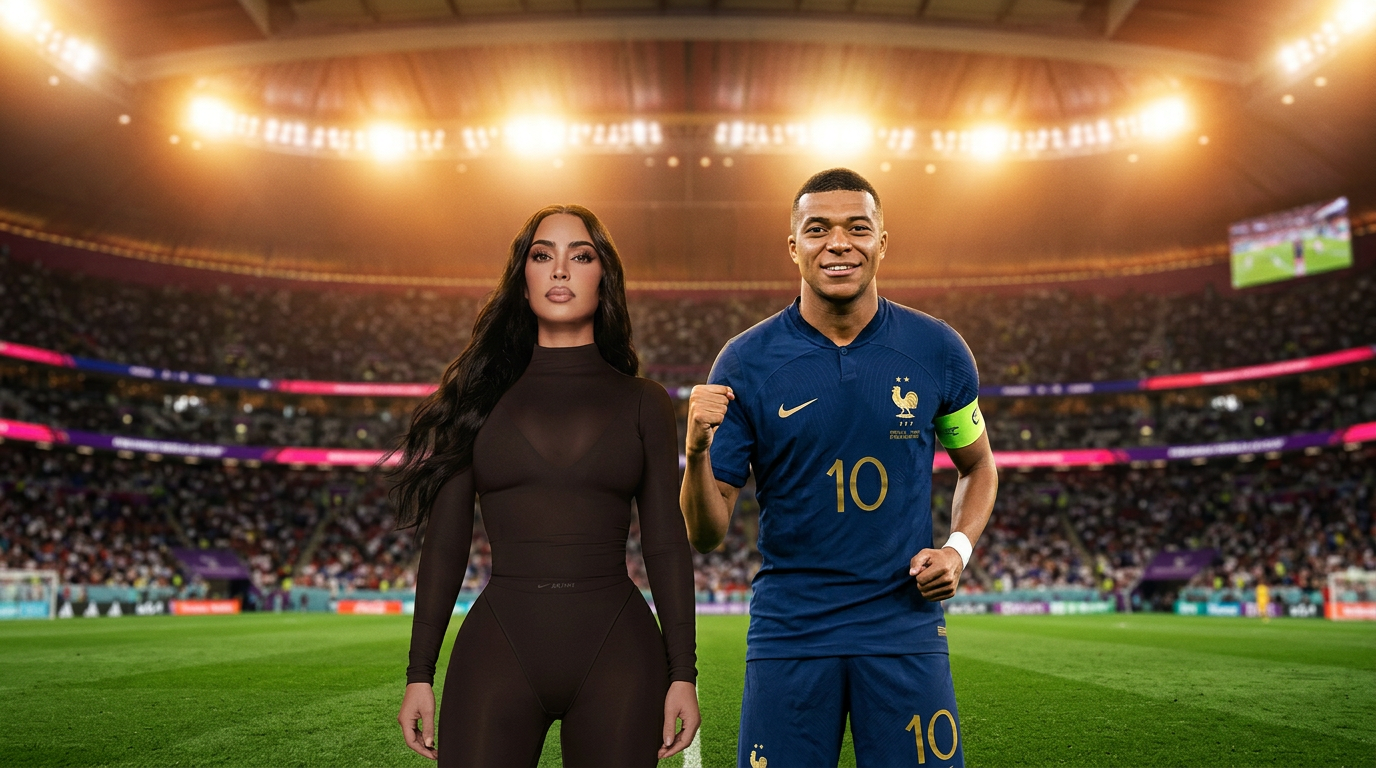
There is a moment, somewhere between the second slow-motion shot and the fifth Hollywood cameo, when Nike's new World Cup film stops feeling like an advert for football and starts feeling like a casting call for an entirely different sport. Cristiano Ronaldo is there. So is Kylian Mbappe. So is Erling Haaland. So, less expectedly, is Kim Kardashian, sitting close enough to the centre of the frame that the question becomes unavoidable. Why is she here, and what is Nike trying to tell us by placing her there?
Adidas, in the same week, released a five-minute short called Backyard Legends. Timothee Chalamet wanders through it like a fan with a notebook, summoning Messi, Bad Bunny, Lamine Yamal, Jude Bellingham, Trinity Rodman, Zidane, Beckham and Del Piero out of the floodlit dusk. He never plays. He narrates. The camera stays low to the grass. The whole thing smells faintly of liniment and Sunday afternoons. Where Nike has built a celebrity cinematic universe, adidas has built a chapel.
adidas made football feel like memory. Nike made it feel like a franchise.
These are the two stories about football we are being asked to choose between this season, and they are not really about kits or boots or signing bonuses. They are about what each brand believes desire looks like in 2026. One brand has decided that football is still powerful enough, on its own, to carry the fantasy. The other appears to have lost faith in that proposition, and is reaching for the most legible cultural sledgehammer it can find. It is, by some distance, the most interesting fashion story of the year, and almost none of it is happening on the catwalk.
Nike's film is called Rip the Script, which is a tidy piece of branding for a campaign that has, in fact, ripped up nothing at all. Helena Thornton, Nike's VP of brand management, has described it openly as a blockbuster, and the word is doing real work. The cast is enormous. LeBron James, Travis Scott, Kim Kardashian, Jason Sudeikis reprising Ted Lasso, Channing Tatum, LISA from Blackpink, Cristiano Ronaldo, Kylian Mbappe, Erling Haaland and Vini Jr. all turn up, alongside cameos from Ronaldinho, Zlatan Ibrahimovic, Didier Drogba, Eric Cantona and Jorge Campos. Nike has also indicated that the film is only the beginning, with roughly 185 additional shorts planned for TikTok, Instagram, X, Reddit and the wider attention economy. The North American setting of the tournament, the brand has said, encouraged it to go bigger, glossier, more Los Angeles.
On its own terms, the film is competent. Glossy, fast, expensive. The kind of thing that plays well in a sizzle reel for shareholders. The problem is not the craft. The problem is the worldview. Nike has decided that the World Cup, the most romantic recurring event in modern sport, is best understood as a content vehicle. A stage. A platform. Somewhere to park your stars and harvest the cultural data. The footballers are present, in volume, but they are no longer the gravitational centre. The gravitational centre is fame itself, of any flavour, from any industry, so long as it scans on a phone screen.
Which brings us, with a slight wince, to Kim Kardashian. Her presence in the film is not random. Nothing in a Nike campaign is random. She is there as shorthand. Shorthand for reach, for the female lifestyle consumer, for the algorithmic certainty of attention, for the NikeSKIMS adjacency that the brand has been quietly building around her for years. She is, in some readings, an entirely rational choice. She moves more product in a day than most footballers move in a season. Her presence guarantees that the campaign breaks containment, washes onto timelines that would never otherwise care about a kick-off in New Jersey, and earns a second life as a meme.
Timothee Chalamet was cast as a believer. Kim Kardashian was cast as a signal.
And yet. The choice still feels diagnostic, in a way the brand may not have intended. Kim Kardashian does not arrive in the football world. The football world is bent slightly toward her. Her gravity is too strong, her aesthetic too codified, her brand too total for her to slip neatly into someone else's mythology. When she appears, she is the story. That is the engine of her career and the entire point of her presence in any frame. To put her in a World Cup advert, then, is to admit that you are no longer entirely sure the World Cup is the story on its own.
The Hollywood Reporter on Nike's Rip the Script roster
Nike's VP of brand management called the film a blockbuster, and the cast list reads accordingly. The trade press has been split between admiration for the ambition and quiet bemusement at quite how far the brand has wandered from the touchline.
View post →There is also a question of audience. Women's football has spent the last five years building one of the most genuinely thrilling commercial stories in modern sport, with a viewing public that is younger, more style-literate, and considerably less impressed by celebrity for its own sake than the marketing departments seem to assume. The young women who watch Trinity Rodman, Aitana Bonmati and Lauren James do not require Kim Kardashian's permission to take football seriously. They have been doing it for years. To position her as the bridge to that audience is to misread the bridge, and possibly the audience.
Adidas's Backyard Legends understood this almost embarrassingly well. The film is led by Timothee Chalamet, who is, by any honest measure, one of the few celebrities in his weight class who can step into a sporting world without immediately bending it toward Hollywood. He arrives as a fan. He recruits. He defers. The football legends are the spectacle, not the supporting cast. Messi appears, and the camera lingers. Bad Bunny appears, and the rhythm shifts. Lamine Yamal and Jude Bellingham move through the frame with the loose, slightly cocky physicality of kids who have always known they were the story. Trinity Rodman is woven in as casually and as confidently as any of the men, which on its own would have been worth a thinkpiece.
The brand has been explicit about the philosophy. Backyard Legends is built around free play, joy, neighbourhood lore, ninety-second flashes of 90s street and terrace style, and the deeply unfashionable proposition that every pitch, even a patch of dust between two flats, can produce a legend. The closing line, You Got This, is the kind of slogan that should feel hokey and somehow does not, because the film has already done the emotional work to earn it. It is a campaign that respects the sport enough to let the sport do the heavy lifting.
adidas understood that nostalgia works best when it still smells faintly of the dressing room.
This is the thing adidas has quietly mastered over the last two years. It uses nostalgia without ever lapsing into pastiche. The retro cues are there, in the silhouettes, the typography, the colourways, the slightly grainy film stock. But they are wired into a present-day story about the next generation, which means the heritage feels load-bearing rather than decorative. The brand is not selling you a memory of football. It is selling you the conviction that the thing you fell in love with is still happening, in a slightly different accent, on a slightly different pitch, with players whose names you are about to learn by heart.
Compare the two casting decisions on symbolic fit, rather than star wattage, and the gap widens further. Chalamet and Kardashian are, in pure celebrity terms, in the same atmospheric layer. Both move tabloids. Both move markets. Both can carry a magazine cover without breaking a sweat. The difference is what each of them does to the world they enter. Chalamet, by temperament and by training, is a chameleon. He can be cast into someone else's universe and serve it, because his persona is porous enough to absorb the room. Kardashian, by design, is non-porous. She has spent twenty years building a persona that does not bend to context. Context bends to her.
Neither of those qualities is bad. They are, in their own ways, miracles of brand engineering. But they make for very different World Cup adverts. The Chalamet version says, gently, that football is the temple and he is a pilgrim. The Kardashian version says, less gently, that football is the location and Kim is the headline. One brand is asking us to fall back in love with the game. The other is asking whether the game can still hold the room without a Kardashian in it.
Then there are the kits, which are not a sideshow to this argument but a continuation of it by other means. Adidas this cycle unveiled what it has called its largest ever collection of home kits, twenty-two bespoke designs for the federations it dresses. The brand has been unusually articulate about its intent. The collection, it has said, combines historic visual identities and traditions with a forward-looking modern aesthetic, with explicit nods to iconic past kits, national histories, past victories, memorable dates, landscapes and architecture. In other words, adidas treated the kits as fashion objects with memory attached. They are not retro for the sake of retro. They are heritage as strategy.
The reception has been the kind of reception that fashion houses spend small fortunes trying to manufacture, and rarely achieve. The kits have been picked apart and praised on every football timeline that matters, photographed against every conceivable backdrop, and styled by people who would not, ordinarily, be caught dead in a polyester replica shirt. Argentina's design has been called liturgical. Germany's has been called grown-up. Mexico's has been called the most beautiful kit of the cycle by people who do not even particularly like Mexico. This is what it looks like when a brand reads the cultural mood with surgical accuracy.
adidas on its largest ever World Cup home-kit collection
Twenty-two bespoke designs across federations, framed by the brand as a deliberate marriage of archival reference and forward-looking aesthetics. The launch leaned into national identity, terrace memory and a confident belief that football fans still want their heritage handled with care.
View post →The kits matter because they are the part of the campaign the consumer actually wears. The advert is for the imagination. The kit is for the body. And when a brand gets both halves right, with one piece of cinema for the dream and twenty-two pieces of fabric for the daily life, the whole proposition coheres. Adidas has done that this cycle. Nike, by all available evidence, has not.
It is at this point that it becomes impossible to talk about the Nike campaign without talking about Nike itself. The brand is not arriving at this World Cup from a position of obvious cultural strength. Its fiscal 2026 third-quarter revenue came in at 11.3 billion dollars, flat on a reported basis, with Nike Direct revenue down four percent to 4.5 billion dollars and Nike Brand Digital down nine percent. Net income fell thirty-five percent. These are not catastrophe numbers, but they are the numbers of a brand visibly trying to recover authority, after several seasons in which On, Hoka, New Balance and a long tail of smaller, sharper labels have been quietly redrawing the map.
Nike reports fiscal 2026 third-quarter results
Revenue flat at 11.3 billion dollars, Nike Direct down four percent, Nike Brand Digital down nine percent, net income down thirty-five percent. The numbers are not catastrophic, but they describe a brand that is no longer setting the cultural pace it once did.
View post →Read in that context, Rip the Script begins to look less like a confident piece of cultural leadership and more like a brand using the World Cup as a high-stakes search for relevance. The celebrity density is not a feature. It is a hedge. If footballers cannot quite carry the campaign to where the brand needs it to go, perhaps a Kardashian can. Perhaps LeBron can. Perhaps Travis Scott can. Perhaps if you throw enough fame at the screen, some of it will stick to the swoosh. This is the logic of cultural overcompensation, and it is rarely the logic of a brand at the peak of its powers.
One brand treated football as mythology. The other treated it as a platform.
Adidas, by contrast, is having one of those years that fashion and sports writers will be referencing for a long time. Sports Business Journal has noted that Backyard Legends is being called, in some quarters, possibly the brand's best World Cup advert in twenty years. The film has racked up serious viral numbers and, more importantly, the right kind of viral numbers, the sort that travel through football Twitter, fashion Substacks and group chats simultaneously. The wider read in the trade press has been that adidas is reaffirming its place at the top of football's cultural heap, at exactly the moment when Nike is grappling with sinking sales and a diminished sense of where it stands.
Sports Business Journal on Backyard Legends
The trade publication highlighted praise calling the spot possibly adidas's best World Cup advert in twenty years, with viral numbers to match, arriving at a moment when Nike is publicly contending with weaker sales and a less certain cultural footprint.
View post →The neat reading is that adidas has won this cycle by being more authentic, but authenticity is a tired word that does most of the work badly. What adidas has actually done is build a coherent point of view about what football is, and then committed to it across every surface, from the five-minute film to the twenty-two kits to the launch photography to the tone of the press releases. The brand has decided that football is still mythology, still inheritance, still the most reliable emotional currency in global sport, and it has dressed that conviction in the best fabric it could find. The audience has rewarded it for the consistency.
So, back to the original question, and the only one that really matters. Was Kim Kardashian an inspired piece of casting or a revealing one? The honest answer is that she is probably both, and that the second is more interesting than the first. Yes, she will move the campaign into rooms football would never otherwise reach. Yes, she scans the NikeSKIMS economy beautifully. Yes, she gives the brand something to clip, screenshot, meme and merchandise for months. None of that is wrong. It is just that none of it is football, and the campaign is supposed to be about football.
The World Cup does not need more celebrity. It needs a point of view.
Adidas and Nike are no longer simply competing over shirts, boots and federation contracts. They are competing over what football is supposed to feel like for the next four years. Adidas believes football is still big enough to be the story on its own, and has bet the campaign on that conviction. Nike, on the evidence of Rip the Script, is no longer entirely sure, and has bet the campaign on celebrity instead. One of those is a position. The other is a hedge. At this particular moment, in this particular cultural mood, the position is winning, and Kim Kardashian, through no fault of her own, has become the most photographed symbol of what happens when a brand reaches for spectacle in the place where conviction used to live.
Kim Kardashian in a World Cup campaign is not a glitch. It is a thesis.
Which fantasy of football do you actually want to wear for the next four years, the one adidas is selling or the one Nike is staging?
Sources
- The Hollywood Reporter: Nike 2026 World Cup ad, Kim Kardashian and Ted Lasso
- adidas Newsroom: Backyard Legends with icons from football, music and film
- adidas Newsroom: Largest ever collection of home kits ahead of FIFA World Cup 2026
- Sports Business Journal: adidas earns praise for Backyard Legends World Cup ad
- Nike Investor Relations: Fiscal 2026 third-quarter results
- Nike Football: Rip the Script (YouTube)
- adidas: Backyard Legends, The Greatest Football Story Ever Told (YouTube)