To be Clear: The World Still & Always Will Choose Ronaldo
The panel hates him. The people love him. No matter how much they put him down, the world will always lift him up, just as he has done for them for 23 years, season after season.
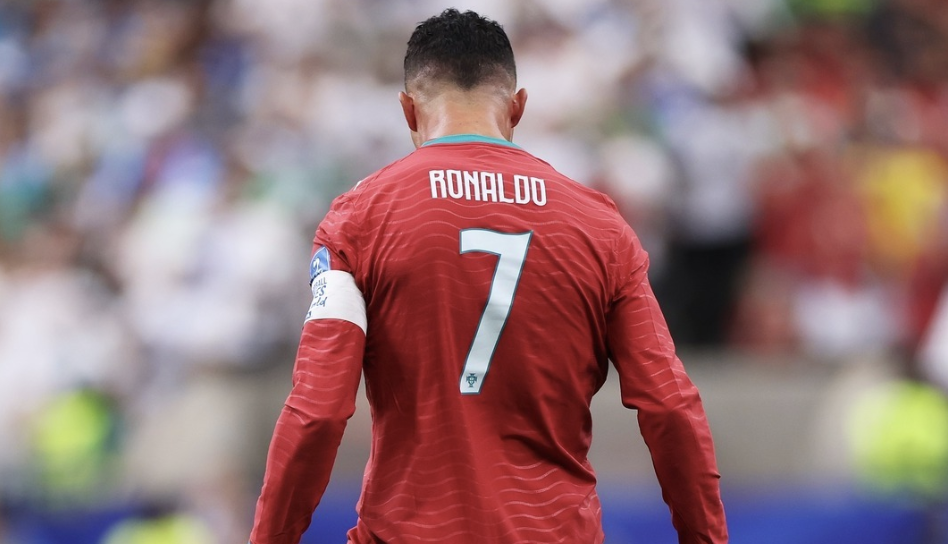
Portugal play Spain tonight after beating Croatia 2-1, and because this is Cristiano Ronaldo, even a win is never allowed to sit quietly and just be a win. He scored his first ever World Cup knockout stage goal, Portugal advanced.
And still, the coverage found a way to turn a night that belonged to him into a referendum on his worth. That is the pattern this piece is really about. Not one match. Not one moment. The stubborn refusal of the industry-elected GOAT conversation to notice who the people actually elected a long time ago.
That is the thing with Ronaldo. The reaction to him is almost never just about football. It is personal because he makes football personal. He injects personality into every phase of the game. Every goal, every miss, every celebration, every grimace, every act of defiance comes loaded with feeling. He does not offer the viewer a clean, silent performance that can be admired from a distance. He brings his whole self into it, the pride, the ego, the discipline, the theatre, the hunger, and that is why the commentary around him is always so charged. People are not just reacting to what he did. They are reacting to what he stirs up in them.
Ronaldo was never built to be the tidy hero
Football, like pop culture, loves a certain kind of champion. The noble one. The chosen one. The figure who feels easy to explain and easy to endorse. The Mufasa. The Clark Kent. The Harry Potter. The one whose talent seems to arrive wrapped in moral reassurance.
Ronaldo was never that kind of figure.
He has always belonged to a messier and far more compelling tradition. He is the character who fascinates because he is too polished, too proud, too visibly hungry to ever be mistaken for innocent. He wants the goal, the record, the adoration, the proof. More importantly, he wants you to see that he wants it. Culture has always had a strange relationship with that kind of appetite. It feeds off it constantly, but still likes to act scandalized by the sight of it.
That is why Ronaldo has always unsettled people in a way other great players do not. He makes ambition visible. He does not hide the machinery. He does not pretend he is above legacy, above vanity, above the need to win and be seen winning. The desire is right there on the surface, fully lit. For some people, that is too much. For others, it is exactly what makes him irresistible.
The polished hero is fine. The difficult, dazzling figure who makes everything feel bigger is better.
And if we are being honest, the game has always needed someone like that. The polished hero is fine. The difficult, dazzling figure who makes everything feel bigger is better.
When Ronaldo scores, it feels like a bolt of lightning
This is the part his critics never quite capture.
A Ronaldo goal is not just a footballing act. It is an electrical event. It lands like a bolt of lightning, sudden, blinding, fully charged. It stirs something deep within you. For some, that feeling is thrilling. For others, vaguely unsettling. But either way, it hits. You feel it in your chest, in the crowd noise, in the way the whole atmosphere seems to crack open for a second.
That was true again against Uzbekistan, when he became the first man ever to score in six different World Cups and then added another to become Portugal's all-time leading World Cup scorer. FIFA framed it as him silencing critics. Yahoo noted that, at 41, he also became the oldest player ever to score a brace in a men's World Cup. It was history, theatre, grievance and self-belief all collapsing into one very Ronaldo evening.
That is why one goal from Ronaldo can feel heavier than three from someone else. It is not just what it does to the scoreline. It is what it does to the air. He turns a football match into a scene, and a scene into a memory.
He reflects the raw side of greatness that people prefer not to romanticize
A lot of sports writing still wants greatness to look graceful at all times. It wants excellence without appetite. Discipline without vanity. Winning without the uglier instincts that often sit underneath it.
Ronaldo ruins that fantasy.
Because what he reflects back is the side of greatness people would rather edit out. The obsessive side. The vain side. The side that remembers every slight, keeps every receipt, and keeps pushing long after taste would have suggested a softer exit. He reminds people that winning is not always elegant. Sometimes it is bruising. Sometimes it is selfish. Sometimes it is relentless in a way that makes everyone else uneasy.
That is also why so many people see themselves in him. Not literally, of course. Very few people are built like Cristiano Ronaldo and even fewer have turned self-belief into a global weather pattern. But people recognize the feeling. The refusal to dim your wanting. The refusal to apologize for caring too much. The refusal to let other people decide when your hunger has become embarrassing.
He is authentic to a fault. He shows you a side of himself the rest of us would only dare confront when we are alone. He not only addresses the elephant in the room, he pokes the bear. He knows what you think about him, what you say when he is not around, what you would never dream of saying when he is standing in front of you. And in true Cristiano form, he does not just give you the cold shoulder. He calls it out. To your face.
That is part of the charge too. He is not merely performing confidence. He is living inside it, sometimes beautifully, sometimes unbearably, but always in public.
The psychology is not complicated. He is powered by a level of passion most people only flirt with.
Psychologist Robert Vallerand's dualistic model of passion separates harmonious passion from obsessive passion. Harmonious passion is deep commitment held in balance. Obsessive passion is when the thing gets wired so tightly into your identity that it starts driving you back, producing rigid persistence, internal pressure, conflict and, often, extraordinary performance.
Ronaldo looks like what happens when passion stops being a trait and becomes a voltage.
That voltage is a gift and a cost. A 2026 study in Frontiers in Sports and Active Living found that obsessive passion and stress predict burnout, while harmonious passion acts more like a protective factor. In plain English, the same fire that creates greatness can also create strain.
But that is exactly why calling Ronaldo "too much" has always missed the point. Too much is not some accidental side effect. It is the engine. It is the source of the charge people feel from him three continents away.
It is not narcissism. It is ambition with no mute button.
People love to pathologize visible ambition because visible ambition makes them nervous. It feels impolite. It refuses to stay in its lane. It makes quieter people defensive.
But a 2023 review, Ambition and Its Psychopathologies, draws an important distinction: ambition is not the same thing as narcissism, even if the two can overlap. Ambition can become distorted, yes, but it is also one of the central engines of human achievement. It is not automatically pathology because it is loud, inconvenient, or impossible to ignore.
That matters with Ronaldo because what people often call vanity in him is also discipline. What they call ego is also authorship. What they call melodrama is often just intensity without a filter. With Ronaldo, you know who you are dealing with. Good, bad and ugly, all of it is right there on the table. There is no fake nice-guy mist around him, no carefully blank canvas onto which people can project whatever version of virtue they prefer. He is too present for that. Too human. Too emotionally legible.
That humanness is exactly what makes him so compelling.
And that is why the world keeps choosing Ronaldo.
BBC's reporting before Portugal's match against Croatia described a city going into full Ronaldo-watch. Fans spilled onto the roads trying to catch a glimpse of him. One of the city's main highways was briefly brought to a standstill. BBC noted that it was "genuinely rarer" to see a Portugal shirt without Ronaldo's name on the back. One supporter said he had "made us dream." After the win, Ronaldo and the Portugal squad stepped out onto their hotel balcony to greet the supporters gathered below.
That is not ordinary fandom. That is mass emotional occupation.
And Toronto is not the exception. It is the pattern. Every city becomes a stage for Ronaldo-mania. Every tournament becomes part football, part pilgrimage, part sighting. He does not just arrive somewhere. He changes the atmosphere of the place.
The numbers are just as absurd. BBC reported that Ronaldo became the first person ever to hit one billion total followers across social media. That is not sports fame. That is global-pop-icon fame.
And that influence runs through the sport itself. Kylian Mbappé has called Ronaldo his "idol" and "the best player in Real Madrid's history." Erling Haaland has said that for "every single football player on this planet," Ronaldo and Messi are examples of how to sustain greatness, while singling out Ronaldo's longevity and body care as "incredible." So no, this is not just about stats. It is about influence. It is about the fact that the players who are supposed to inherit the game still speak about him like a blueprint.
When Ronaldo does anything, the aftershock is felt across oceans. That is why the SIUUU is not just a celebration. It is a signal. A release. A sound people wait for before the moment has even arrived.
He's not PR-trained. Not safely packaged. He's human.
That is why it is always personal with Ronaldo.
Before Portugal's game against Spain, Ronaldo addressed the criticism around him directly. "You have been trying to kill me for the past 23 years," he said. He added that this would be his last World Cup and that he would leave with a "clear conscience" because he had given everything. It was classic Ronaldo: proud, wounded, defiant, impossible to ignore.
And maybe that is the whole thing.
With Ronaldo, the persona cannot be separated from the game. That is not a flaw. It is the source of the power. It is why they cannot keep his name out of their mouths. It is why people love him, hate him, defend him, attack him, and still cannot stop watching him. He is not just part of football. He is one of the last players who still feels like the pulse and heartbeat of it.
Not tidy. Not PR-trained. Not safely packaged.
Human. Volcanic. Real.
He was never built to be easy. He was built to be felt.
The media may prefer Messi. Ronaldo still has the streets.
Do you think Ronaldo is overhated by the media?
Sources
- BBC Sport: Portugal beat Croatia 2-1
- GiveMeSport: BBC pundit backlash
- FIFA: Ronaldo silences critics vs Uzbekistan
- Yahoo Sports: oldest World Cup brace scorer
- BBC News: Ronaldo passes 1 billion social followers
- Goal: Mbappe on Ronaldo as his idol
- ESPN: Haaland on Ronaldo's longevity
- Vallerand, dualistic model of passion (JPSP)
- Frontiers in Sports and Active Living: passion, stress and burnout
- Ambition and Its Psychopathologies (2023)